Why Professional Monitoring Matters After Gum Disease Treatment

Gum disease rarely ends when the deep cleaning is over, the antibiotics are finished, or the gums stop bleeding. That is the point many patients feel relieved, and understandably so. The tenderness is better. Brushing is less unpleasant. The urgency that pushed them into the dental chair begins to fade. Yet from a clinical standpoint, that moment is not the finish line. It is the beginning of maintenance.
That distinction matters because gum disease is not a one-time event in the way a chipped tooth or a lost filling might be. Periodontal disease is a chronic inflammatory condition shaped by bacterial biofilm, immune response, anatomy, daily habits, and general health. Even when treatment works well, the mouth does not simply reset to factory settings. The supporting tissues around the teeth may be healthier, but they remain vulnerable. Some pockets may shrink dramatically, while others improve only partially. Areas with bone loss can become stable, but they still require watchful care.
Professional monitoring after Gum Disease Treatment protects the gains made during active therapy. It catches relapse early, before the patient feels pain or sees obvious damage. It also helps the dental team separate normal healing from the subtle signs that disease activity is returning. Patients are often surprised by how little discomfort gum disease can cause while it is progressing. That quiet nature is exactly why follow-up matters so much.
The hidden phase after treatment
Most people think treatment solves disease in a straightforward sequence: diagnosis, procedure, recovery, done. Periodontal care is more nuanced. The first phase usually aims to reduce infection, disrupt bacterial deposits below the gumline, and calm inflammation. Depending on severity, that may involve scaling and root planing, localized antimicrobials, surgery, or referral to a periodontist. When the gums look better and measurements improve, treatment has succeeded, but stability still has to be defended.
Healing gums can give a false sense of permanence. Swelling decreases, and as the tissue tightens, pockets often measure smaller. Bleeding is reduced. Breath improves. Those are excellent signs, but they do not guarantee long-term control. Plaque biofilm reforms quickly. Patients with deep restorations, crowded teeth, dry mouth, diabetes, smoking history, or reduced dexterity often struggle to keep certain areas clean enough on their own. Even highly motivated patients can miss the lingual surfaces of lower molars or furcation areas where roots divide. Those sites are notorious for reaccumulating bacteria.
I have seen this pattern many times in practice. A patient commits fully to Gum Disease Treatment, returns for the first reevaluation, and the results are encouraging. Four-millimeter pockets become three. Bleeding points drop sharply. Home care has clearly improved. Then life happens. A missed maintenance visit turns into a year. The patient comes back because a crown feels loose or food packs around a back tooth. On probing, the previously stable site has deepened again, not because the original treatment failed, but because disease control was never meant to be passive.
Monitoring is not just “a cleaning”
One of the most persistent misunderstandings is that post-treatment visits are simply routine cleanings with a more expensive label. They are not. Periodontal maintenance has a different purpose, and the appointment should be approached differently by both patient and provider.
A standard prophylaxis is designed for a mouth without active periodontal breakdown and without a significant history of attachment loss that requires close surveillance. Maintenance after Gum Disease Treatment assumes the opposite. The clinician is not only removing plaque and calculus. They are evaluating the health of the attachment apparatus around every tooth. They are comparing pocket depths, watching for bleeding on probing, checking mobility, assessing recession, and noting whether specific trouble spots are stable, improved, or worsening.
That level of surveillance matters because small changes often come before big problems. A site that moves from three millimeters to five, with bleeding and localized inflammation, may not bother the patient at all. There may be no pain, no swelling, and no obvious cosmetic concern. Yet that change can signal renewed attachment loss. Catching it at that stage can mean localized retreatment and a home care adjustment. Missing it can mean more extensive bone loss, a poorer long-term prognosis, and a much more expensive problem six or twelve months later.
Why relapse happens even in conscientious patients
Relapse does not always mean neglect. Some patients assume that if disease returns, they must have failed. That is not a useful or accurate way to view periodontal biology. Home care is critical, but it is only one variable.
Certain mouths are simply harder to maintain than others. Deep root grooves, old crowns with subgingival margins, bridges, implant restorations, rotated teeth, partial dentures, and recession defects can all create plaque traps. Salivary flow matters too. Patients taking medications for blood pressure, anxiety, allergies, or depression often deal with dry mouth, which can change the oral environment in ways that complicate plaque control. Systemic health also influences periodontal stability. Diabetes, especially when blood glucose is poorly controlled, is well known to affect inflammation and healing. Smoking remains one of the strongest negative factors. Hormonal shifts can change tissue response. Chronic stress does not directly cause periodontitis, but it often worsens grinding, sleep quality, and home-care consistency.
Then there is the microbiological reality. Harmful bacteria can recolonize periodontal pockets after treatment. The speed and extent vary by patient. Professional disruption of that biofilm at intervals tailored to individual risk is one of the main reasons maintenance works. It is not glamorous, but it is effective.
What clinicians are looking for at maintenance visits
A proper maintenance appointment is investigative as much as therapeutic. The instruments and polishing paste tell only part of the story. The more important work often involves measurement, comparison, and judgment.
At well-run follow-up visits after Gum Disease Treatment, the team typically assesses:
- pocket depths and changes since the last charting
- bleeding on probing and visible tissue inflammation
- plaque and calculus accumulation patterns
- tooth mobility, recession, and furcation involvement
- whether radiographs or referral are needed for suspicious areas
Each of those findings contributes https://jsbin.com/huzibelibe to a risk picture. A few isolated bleeding points in a patient who otherwise looks excellent mean something different from generalized bleeding with increasing pocket depth in a smoker who has missed visits. Monitoring is not a box-checking exercise. It is pattern recognition over time.
This is also where experienced clinicians earn their keep. Numbers matter, but so does context. A stable six-millimeter pocket around a molar with no bleeding, no suppuration, and no radiographic progression may be maintained successfully for years with careful observation and site-specific cleaning. On the other hand, a new five-millimeter pocket with bleeding on a previously healthy premolar may demand immediate attention. The same measurement can carry different clinical weight depending on the history and the surrounding findings.
Timing is part of treatment, not an administrative detail
Patients often ask why three- or four-month maintenance intervals are recommended instead of the familiar six months. The answer is not arbitrary. Research and clinical experience both support shorter intervals for patients with a history of periodontitis, especially in the first phase after active treatment. Biofilm matures over time, and vulnerable sites can deteriorate before a six-month gap is over.
That does not mean every patient needs the exact same schedule forever. The interval should reflect disease severity, response to treatment, anatomy, systemic risk factors, and home care reliability. Some patients do well at three months for several years. Others may eventually move to four months if they show excellent stability. A six-month interval can be appropriate in selected low-risk cases, but it should be earned through evidence of sustained control, not assumed by default.
In practice, the biggest problem with extended intervals is not that catastrophe strikes between one visit and the next. It is that small setbacks have more time to compound. A little calculus hardens in a deep pocket. A crown margin traps more plaque than expected. Brushing gets rushed during a stressful season. Blood sugar control slips. None of these changes announce themselves loudly, but together they create the conditions for recurrence.
The cost of “waiting to see if it gets worse”
Periodontal disease becomes more expensive the longer it is allowed to smolder. That expense is not limited to fees. It includes time, discomfort, tooth structure, and treatment complexity.
When monitoring is skipped, the disease often returns silently. By the time a patient notices looseness, gum shrinkage, bad breath, or food impaction, the tissues may already have lost additional support. A site that might have responded to localized debridement, irrigation, and improved interdental cleaning may now require surgery, splinting, extraction, or prosthetic replacement. Those are not equivalent outcomes.
There is also a restorative consequence that general dentistry sees all the time. Teeth with compromised periodontal support become harder to restore predictably. Crown margins are more difficult to manage. Open contacts trap food. Occlusal forces become less forgiving. Even excellent restorative work has a weaker foundation if the supporting tissues are unstable. Monitoring after Gum Disease Treatment is not separate from the rest of dentistry. It is what allows the rest of dentistry to last.
What patients often miss between visits
Most relapse is detected in the chair, not at home. That said, there are signs patients should take seriously rather than waiting for the next scheduled appointment.
- bleeding that returns during brushing or flossing after it had stopped
- persistent tenderness or swelling in one area
- new bad breath or a bad taste that does not resolve
- food trapping where it was not happening before
- teeth that feel slightly different when biting or cleaning
These symptoms do not always signal recurrent periodontal disease. A trapped popcorn hull, a rough filling edge, or localized trauma can cause similar complaints. Still, changes like these deserve evaluation. One of the most useful habits a patient can develop is reporting subtle changes early instead of trying to self-diagnose for months.
Monitoring creates accountability, but also coaching
There is a human side to maintenance that often gets overlooked. Regular follow-up keeps patients engaged with their own progress. That is not about scolding anyone for imperfect flossing. It is about reinforcing what is working, troubleshooting what is not, and making home care realistic for the life the patient actually lives.
This is where practical experience matters. A patient with arthritis may need larger-handled interdental brushes or an electric brush with a pressure sensor. A patient with bridges may clean brilliantly once shown how to use threaders or water irrigation effectively. Someone with deep lower anterior crowding may need very specific instruction on brush angle and stroke, not another generic reminder to “brush better.” Monitoring gives the clinical team repeated chances to refine technique.
It also helps with motivation. Patients are more likely to stay consistent when they can see the connection between daily habits and measured improvement. Showing a patient that bleeding points dropped from twenty to four is powerful. So is telling them that a tooth once at risk now looks stable after six months of disciplined maintenance. Those are tangible wins, and they matter.
Not every mouth stabilizes the same way
One reason professional monitoring is indispensable is that recovery paths vary. Some patients respond rapidly to treatment, with dramatic reductions in inflammation and pocket depth. Others improve more slowly because of anatomy, immune response, medication burden, or systemic disease. The follow-up process allows the clinician to decide whether the current plan is sufficient or whether escalation is needed.
A common edge case involves residual deep pockets after nonsurgical therapy. If most of the mouth improves but a few molar sites remain at five or six millimeters with bleeding, the question becomes whether to continue maintaining them, retreat them nonsurgically, or refer for periodontal surgery. There is no universal answer. A healthy nonsmoker with excellent home care and stable radiographs may be managed conservatively for a time. A patient with persistent inflammation and difficult access may benefit far more from surgical access that allows definitive root debridement and contour correction.
Implants introduce another layer of complexity. Patients who have had Gum Disease Treatment are generally at higher risk for peri-implant disease than patients with no periodontal history. Monitoring therefore extends beyond natural teeth. Probing around implants, assessing soft tissue health, and checking for early bone changes are essential, especially when implants are placed in mouths that previously lost support from periodontal infection.
The role of radiographs and records over time
Good monitoring depends on records, not memory. Periodontal disease is a condition of change over time, and that means charting matters. Probing depths, recession measurements, bleeding scores, furcation notes, mobility grades, and radiographs create a timeline that lets the team detect meaningful trends.
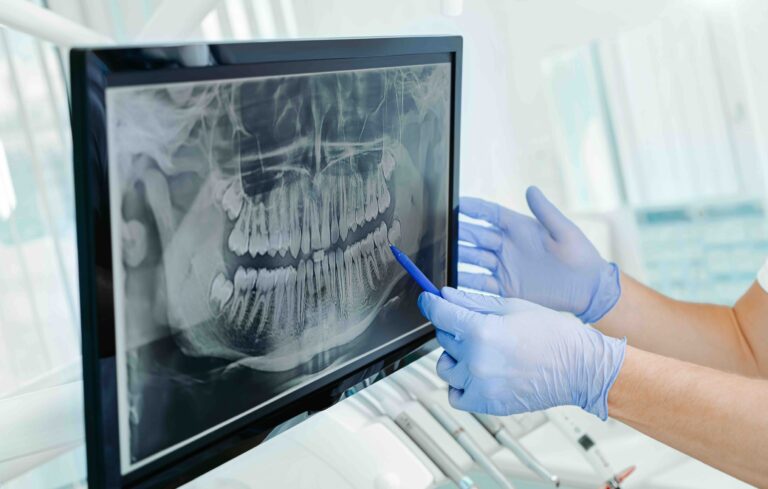
Patients sometimes resist radiographs if they are not in pain. That hesitation is understandable, but it misses the point. Bone loss does not announce itself dramatically in the early stages. Bitewings or periapicals, taken when clinically indicated, can reveal vertical defects, calculus deposits, widening of the periodontal ligament, or progression that is not evident on visual inspection alone. Monitoring is stronger when clinical and radiographic findings support each other.
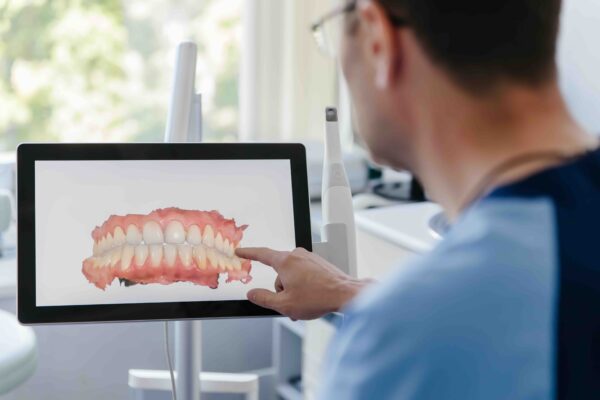
The same goes for photographs and intraoral scans when available. They can document recession patterns, inflammation, and changes around restorations. None of these tools replaces clinical judgment, but together they sharpen it.
Professional monitoring and whole-body health
Periodontal maintenance is often framed as a dental issue, but the implications reach further. The relationship between gum disease and systemic health is complex and still being refined, yet the connection is strong enough that neglecting maintenance is hard to justify, particularly in medically vulnerable patients.
For patients with diabetes, uncontrolled periodontal inflammation can make glycemic management more difficult, and poor glycemic control can worsen periodontal outcomes. That two-way relationship is clinically relevant, not theoretical. Patients preparing for major medical treatment, including certain orthopedic, cardiac, or transplant-related procedures, also benefit from having chronic oral infection controlled. Even for otherwise healthy adults, maintaining a stable periodontal environment reduces one persistent source of inflammation and bacterial burden.
This does not mean every gum problem causes systemic illness, nor does it justify dramatic claims. It does mean the mouth should not be treated as separate from the rest of the patient.
When maintenance saves teeth that looked uncertain
Some of the most satisfying cases in periodontal care are not the dramatic rescues. They are the quiet saves. The tooth with borderline support that remains functional and comfortable for another eight or ten years because the patient kept every maintenance visit. The molar with furcation involvement that avoids extraction because recurrent inflammation was caught early and managed consistently. The patient who had advanced disease in their forties and reaches retirement with most teeth intact because post-treatment monitoring became routine.
Those outcomes rarely make headlines. They are built in small increments, appointment by appointment. They depend on a partnership. The dentist or hygienist can debride, measure, coach, and reassess. The patient can clean, return, report changes, and follow through. Neither side can carry the full burden alone.
What patients should expect from a serious maintenance relationship
A practice that takes periodontal stability seriously will not treat maintenance as an automatic checkout code. Patients should expect explanations. If pockets are improving, they should hear that. If a site is worsening, they should be shown where and told what the next step is. If home care needs to change, the advice should be specific enough to use that night in the bathroom mirror.
They should also expect recommendations that fit their risk, not somebody else’s template. A healthy patient with limited disease history and superb plaque control may not need the same intensity of follow-up as a smoker with generalized bone loss and multiple deep restorations. Personalization is part of professionalism.
That is why monitoring matters so much after Gum Disease Treatment. It preserves the progress already achieved, catches trouble while it is still manageable, and gives both patient and clinician a realistic way to keep the disease controlled over the long term. Active treatment reduces the infection. Ongoing professional surveillance is what helps keep it from quietly returning.
Dental Group Of Beverly Hills
Address: 8641 Wilshire Blvd #125, Beverly Hills, CA 90211
Phone number: +13109296335
FAQ About Gum Disease Treatment
How to improve gum health quickly?
To improve gum health quickly, eliminate plaque buildup by brushing for two full minutes twice a day at a 45-degree angle to the gumline. Floss daily to clean under the gumline, and rinse with an antimicrobial, alcohol-free mouthwash. For immediate relief of soreness, use a warm saltwater rinse.
What is the fastest way to cure gum disease?
To quickly cure early-stage gum disease (gingivitis), eliminate the plaque buildup causing the inflammation. Brush gently but thoroughly for two minutes twice daily, floss daily, and use an antibacterial mouthwash or a warm saltwater rinse. However, if tartar has hardened, professional treatment is necessary.
How do I treat my gum disease at home?
You can treat early gum disease at home by practicing strict daily oral hygiene, rinsing with salt water or antibacterial mouthwash, and quitting smoking. True gum disease (especially advanced forms like periodontitis) cannot be fully cured at home once tartar forms, and you must see a dentist for professional cleanings.